Wednesday, December 28, 2011

..and we're back!!


My last entry was 7 months ago, when I was leaving Kibbutz Lotan in the Negev of Israel. Can’t believe it’s only been 7 months – so much has happened since then, hitting home on the idea that when change begins, it picks up exponentially. So let’s see – what’s happened since then?


Camp – the impetus to my Kibbutz Lotan trip. What an amazing summer it was! Brian Hertz and I worked our little bums off (with the help of so many wonderful folks – Adam Allenburg, Michelle Renfrow, Scott Brasewell, Loui Dobin, the amazing Maintenance team, and every single staff member and camper for their love and support) planning programs, running programs, re-running programs, taking care of the garden, and developing the culture of camp to be more sustainably oriented.  Here are a few highlights:
·         Bunk day – Bunk day is the first full day of camp that is all about building your bunk community. For Bunk Day, Brian and I ran an individual program for each unit, which focused on the environment and Judaism. There was an activity adapted for each age group, but the point of the program was constant throughout – Sustainability is about sustaining the world, it's creatures, and most importantly, ourselves. In doing this, environmental stewardship became a full-frontal focus for the summer.
·         Kibbutz Program – The Kibbutz kids (14-15 year olds) were the prime ingredient for keeping the garden and the sustainability program alive this summer. A set of 10-13 kibbutznicks came every day for a week, weeding, harvesting, and tending to the garden, all with a great attitude. When I say these kids were the prime ingredient in the success of the sustainability program, they were like the broth in a pot of soup – the one thing that made it complete. It is because of these kids that the sustainability program at camp has blossomed.
·         The Garden – this was only the second summer for there to be a garden at camp, and this garden lasted almost all the way through, which is saying a lot for Texas. It was unbelievably hot this summer, temperatures rising to 101 degrees, sometimes higher. But our garden stayed strong, producing copious amounts of okra, tomatoes, watermelon, cantaloupe, and collards. I’m convinced it was more than just the drip irrigation that kept it going – there was a whole lot of love and support throughout the entire summer for the sustainability program, and plants tend to pick up on those kinds of things J
·         Earth Night – Earth Night was an all-camp program that was all about – you guessed it – the Earth! We ran the evening program as an eco-fun house, each room focusing on a different subject of sustainability. The themes? Alternative energy, soil, pollution, and sustainability in Israel, topped with segments of Discovery Channels Planet Earth to conclude the evening. The most amazing part of Earth night was the Havdallah services, which took place as the beautiful sun was setting over camp.  Campers from the Sustainability Limud wrote about appreciating the environment and nature. Here’s one a camper wrote about their feelings towards the environment:
‎"Do you ever wonder why you close your eyes when you kiss someone, or why they are shut when you dream? It is because the most beautiful things can't be seen, but felt with the heart. Take a second and close your eyes. Can you hear the birds, the bugs, maybe even the wind? Can you sense twilight coming with the sunset? Don't try to think; just be one with the world."
If you’d like to read more about Earth Night, here’s the link to the blog entry posted over the summer: http://greene.rjblog.org/2011/07/26/earth-night/


So, what happened after camp was over? An amazing donation to build an eco-village on the camp site where the new Kibbutz program will reside. Jaw-dropping, right? I may or may not have freaked out just a little bit when it happened…more emphasis towards the may. So as of August, camp has been undergoing a huge new project to build an eco-village, modeling it after the Bustan Neighborhood at Kibbutz Lotan, domes and all!

Where do I fit into all of this? At the end of the summer, camp offered me the position as the Eco-Village Director for the following summer, which I gladly and have enthusiastically accepted. I’m incredibly thankful for such a wonderful opportunity. So now, I’m returning back to Israel and Kibbutz Lotan to complete the Green Apprenticeship Program and get my certification in permaculture and eco-design. After Lotan, I will be traveling to other sustainable kibbutzim to see what and how they do what they do, and am then coming back to the states to work/volunteer at Jewish-based sustainable farms to learn as much as I can about Judaism and the environment. Then, it’s back to camp to implement all the goodness I learn!!

I’ll be honest, I’m freaking out just a bit J Stay tuned for all of my adventures, discoveries, realizations, hardships, and whatever else comes my way!

Tuesday, May 31, 2011

"Enjoy the end just as the beginning..."

So, today's the day I leave this Oasis in the desert to embark on a new adventure, one that will continue and build upon the work, or avodah, that I've experienced here. It's been a truly magical experience – the people, the place, the spirit, the community – a kibbutz that embraces and lives Reform Judaism as a holistic lifestyle based in equity, ecology, community, and Tikkun Olam. In just two weeks, I learned so much about sustainability, beyond just the physical practices of turning off lights, conserving water, recycling, gardening, etc. Sustainability is about sustaining the world, it's creatures, and most importantly, ourselves. We're living in a world-wide village that's becoming more and more connected every single day and thus it is our inherent responsibility as world citizens to preserve and build upon our village for the future generations. If there is one thing we can do for those who succeed us, it is to leave a world for them that they too can leave for their children. As stated: “Treat the earth well. It was not given to you by your parents. It is loaned to you by your children” (Kenyan proverb).

Human kind began our existence as guardians of the Garden of Eden, or gardeners for short. It's been embedded in us from the getgo. It feels good to get our hands dirty, to reawaken our intuition of how the earth works. Lotan brought this forgotten intuition (that is within everyone) back to life for me. The people at Lotan also instilled in me the importance of gratitude and appreciation – it is from these feelings that we learn to care, support, love, and let go. Being thankful for something or someone naturally conjures up positive traits and mindsets that help our world-wide village go 'round. I am incredibly grateful for the opportunity to have been apart of the Lotan community and am also very thankful to those who helped make it happen, especially Loui Dobin, Alex Cicelsky, Lean Zigmond, Mike Kaplin, the URJ, and all of my friends and family for the wonderful support. All of you deserve super awesomely special gold stars :)

Lotan is a living dream of Reform Judaism, connecting the gap between people and the land. It brings intention to the connection, instilling the community in more than just sustainable practices-it teaches that the idea of sustainability is in everything, including us, just as Life is in everything and all of us. 

So the next chapter? Greening Greene in Bruceville, Texas. Get ready for a Green Revolution people :)

Saturday, May 28, 2011

Days 11 & 12: it's that time of the week

The thermostat reads 41° Celsius, which is about 105° Fahrenheit. The thermostat is in the shade. It's not as bad as Bruceville, Texas though – it's nice and dry here, whereas Bruceville LOVES the humidity. But it's still toasty. Everyone's a little heat crazy today.

Today is Shabbat, so the heat came at a good time – I don't know what I would do if we were mud-building today. If anything, it would prepare me for the second half of the summer time when Bruceville feels like a sweat lodge. What I need is a nice big hat to keep me cool and shade my shoulders!

This week was full of lessons, from blackwater systems to mud-bricks 101. Here's a pictorial overview of my week!

Digging up earth for mud-bricks.

How I feel about building mud-bricks :)

Purple lettuce!

Learning about sludge traps, which are AWESOME for preventing clogged sinks and foul smells, in addition to saving a ton of money in the long run. Every house should have these!

Solar powered water heater

The door to the septic tank...yum....

Road trip!!

 
Just one more work day left here at Lotan, then heading back to the states on Monday. It's crazy how time works-the days feel like weeks and the weeks feel like days. It's been such an incredible learning experience, and it continues everyday :)

Wednesday, May 25, 2011

Day 10: smell the roses...


Ever been on a tour of a septic sewer system? Quite delightful, let me tell you. Here at Lotan, their sewer system consists of septic tanks and constructed wetlands, which are both environmentally friendly and harness the power of nature to breakdown contaminants.

Constructed wetlands are super awesome – basically man's version of a marsh or swamp, which act as an amazing natural filter for wastewater. Here's a diagram:

 Basically what happens is wastewater flows in and percolates through a series of rocks, gravel, and hydroponic plants (water plants). These components produce micro-organisms that feed off of the contaminated water, breaking it down and removing the pollutants. By the time the water reaches the end, it's clean! Pretty cool stuff, that whole nature thing. From there, you can either pump the clean water to your garden or another wetland, depending on what you prefer. 
A diagram of a horizontal subsurface flow constructed wetland system. It starts on the right with the person, ends on the left with the tree! (Click picture to enlarge)

Learning about the constructed wetland!

Constructed wetland 


Tuesday, May 24, 2011

Day 9: plant love

Plant propagation is the process of creating new plants. Every plant reproduces in 2 ways: sexually and asexuality. Here's the deal:

Sexual Propagation
Asexual/Vegetative Propagation
  • Reproduction through seeds, which allows for 2 things:
    • genetic diversity
    • plants to adapt/evolve to particular climate
  • Most fruits and flowers reproduce sexually
  • Reproduction without seeds, creating plant exactly like the parent plant
  • Also referred to as Vegetative Propagation, because vegetables produce in this way
  • Different types of vegetative propagation, including grafting, budding, cuttings, and many more

We learned about all the different ways vegetative propagation occurs, including cuttings, grafting, and budding. Cutting involves cutting a part of the parent plant, then planting it in soil. When the severed piece of the parent plant is planted in soil, it sprouts roots from the nodes, the part of the stem from which leaves, branches, and/or flowers normally grow. Once planted, the plant regenerates itself, forming a whole new plant.
Cutting sweet potato stems. It's ideal to use clippers or a knife, as this reduces damage to the plant.

Rule of Thumb: cut at every 6 nodes, which is about the length of the starter pots.
Planting cut sweet potatoes in starter pots. Yay for propagation!

I also want to share a wonderful sentence spoken by a participant of the Green Apprenticeship program when talking about permaculture. Along with sustainability and permaculture, I think it applies to just about any endeavor in life: "It's not an intellectual process, it's an experimental process."

Monday, May 23, 2011

Day 8: everyone needs "sun" love...

Sun (n.): the star that is the central body of the solar system, around which the planets revolve and from which they receive light and heat; a self-luminous heavenly body that radiates energy, especially heat and light. (thank you, dictionary.com)

Solar energy is hot, literally – solar panels, heaters, dehydrators, water heaters, the list is endless. Utilizing it in order to cook food though? Ohhh baby, you betcha :)

I've mentioned solar ovens in a few of my posts, but not the nitty-gritty details. Here's why they're hot:
  1. Utilizing solar ovens saves forests, animals, our lungs, energy and electricity bills, and just about everything else on this planet.
  2. They're super easy to make, and a great way to recycle cardboard, aluminum, mirrors, baskets, coolers, old clothes, paper, grass, straw, wood, trunks, pizza boxes...the list goes on and on!
  3. Because you can get real creative with them, it's a GREAT project for the family, schools, and CAMPS (cough, cough).
  4. SUN=FREE SOURCE OF ENERGY
  5. Food cooked in solar ovens tastes better – because of the slow-cooking process, nutrients are not zapped and the food retains most of it's natural flavor.
  6. Because you have to follow the sun in order to properly cook food, you become more connected to nature and the natural rhythm of the day.
Among these major reasons, solar ovens are making a huge impact in impoverished countries. Check out this incredible video:

So how do they work? Basically like a slow-cooker or crock pot, but through the principal of the greenhouse effect: sunlight is converted into heat energy, which is then used for cooking. A clear sky is required, but in certain climates solar ovens can be used on a cloudy day, as long as the food is put out early and there is overall more sun than not. Cooking food in dark pots and pans is most ideal because dark surfaces trap heat, whereas light colored surfaces don't. By reflecting extra sunlight onto one or more shiny surfaces of the pot, the heat potential is increased. Mirrors, aluminum foil, mirror-finish metals, and other shiny materials have all been used successfully for solar cooking, depending on the type of cooker and the environment in which it's used.

There are many kinds of solar ovens. Here's a few pictures from www.solarcooking.org, an NGO dedicated to spreading solar cooking awareness and skills worldwide. Their website contains a vast amount of information on solar ovens, from solar cooking basics to how to build your own!
Panel style cooker, dubbed the "Cookit"

Box-style cookers, much like the ones found here on Lotan
 What I find empowering about harnessing the Sun's energy is it's humbling simplicity – as technology becomes more advanced and the generations less in touch with the natural rhythms of the earth, we're finding ways to reconnect with nature and it's amazing gifts.


Saturday, May 21, 2011

Days 6 & 7: a recap


Parabolic Oven

Solar Oven

Mud Master Jessi!

Repairing the mud bench

Band from the local cultural event


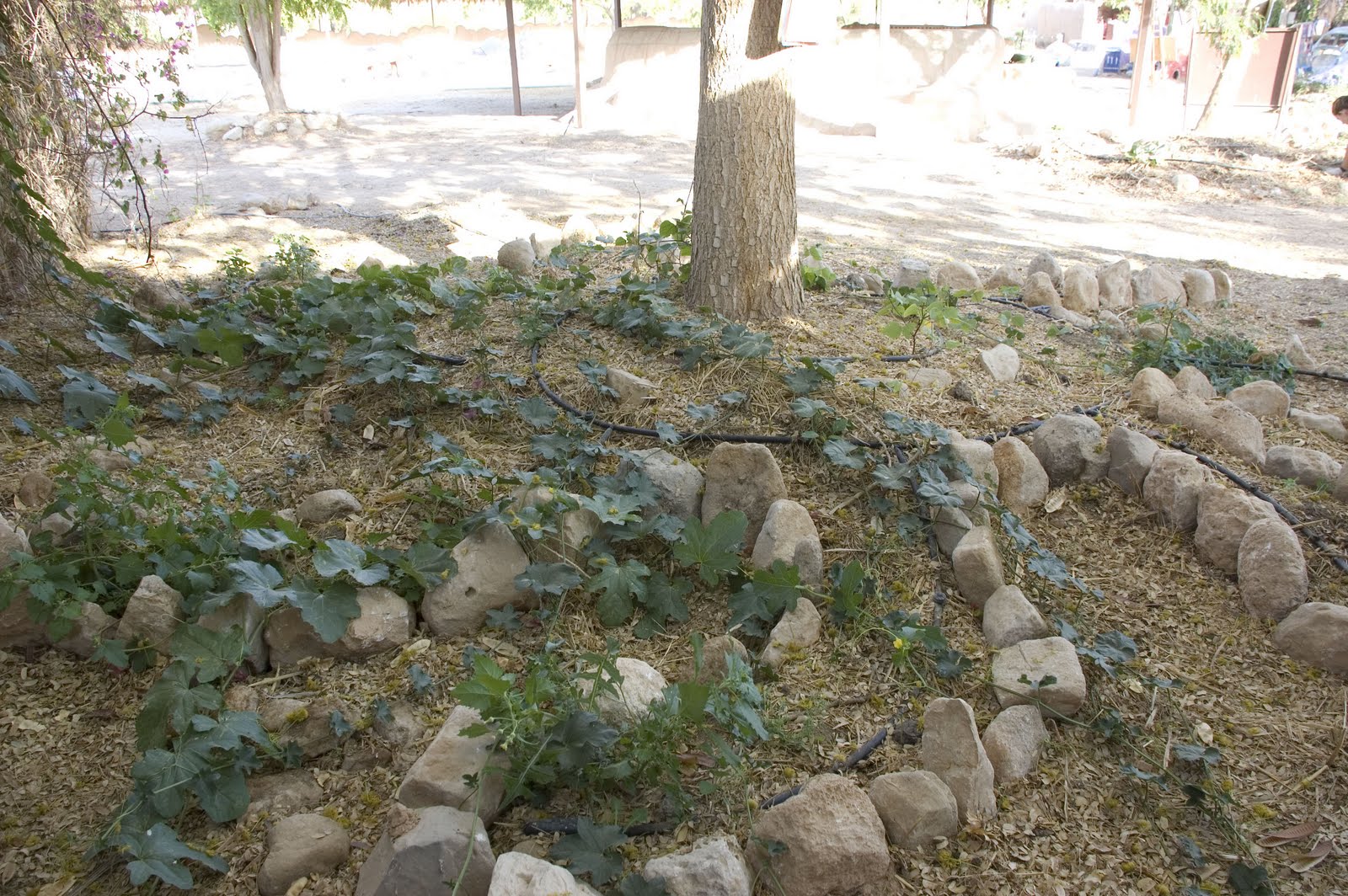
Mulching the Garden and a side view of the covered garden
In spirit of Shabbat, I've decided to post pictures summarizing my first week here at Lotan, from my first day up till my garden days. Shabbat is a time of reflection and rest, which I am gladly taking part in.
It's very rewarding working all day because you start to appreciate life's necessities - water, food, sleep, and people - more. I slept 10 hours straight last night, and probably could have slept longer if I didn't wake up to my stomach growling.
Tomorrow is the start to another week of working, learning, and living. And as necessary and relaxing as this Shabbat has been, I'm ready to get my hands dirty again :)